
2025 In Books
As I pondered my reading intentions for the year in January, I decided to prioritize reading classics. Classics have always been my favorite but I steered away from them in recent years to try and expand my tastes. After a few years, I found that I began avoiding them because of length or density and that just would not do. My reading plan for 2025 was for my selections to prioritize classics. And though my reading goal for 2025 was smaller in number, it was greater in quality.
Here’s a quick overview:
2025 Reading Goal: 15 (half of previous years)
Books started: 19
Books completed: 17
Audiobooks/Page-in-hand: 6/11
Re-reads/First read: 1/16
Modern/Classic: 6/11
Another perk to reading fewer books is that I can review them all in this annual update. Buckle up.
January
Anna Karenina by Leo Tolstoy
I started 2025 off strong with one I’ve intended to read for many years, Anna Karenina by Leo Tolstoy. Though it is incredibly long, this book was the perfect one to kick off my year of classics because it reminded me of all the reasons I love them: beautifully written, themes that speak to the soul, and edifying.
I have a soft spot for Russian Literature, so this novel (which is considered by many to be the best ever written) was perfect for me. Tolstoy is a master of the craft and deeply understands the human condition. Though I prefer War & Peace, I found Anna Karenina to be without flaw and highly recommend to any literature lover.
⭐⭐⭐⭐⭐
February
Demon Copperhead by Barbara Kingsolver
Okay, I realize that Demon Copperhead by Barbara Kingsolver is not a classic, but it is classic adjacent. An adaptation of David Copperfield by Charles Dickens, this book received the 2023 Pulitzer Prize for fiction, so I felt that it met my quality criteria.
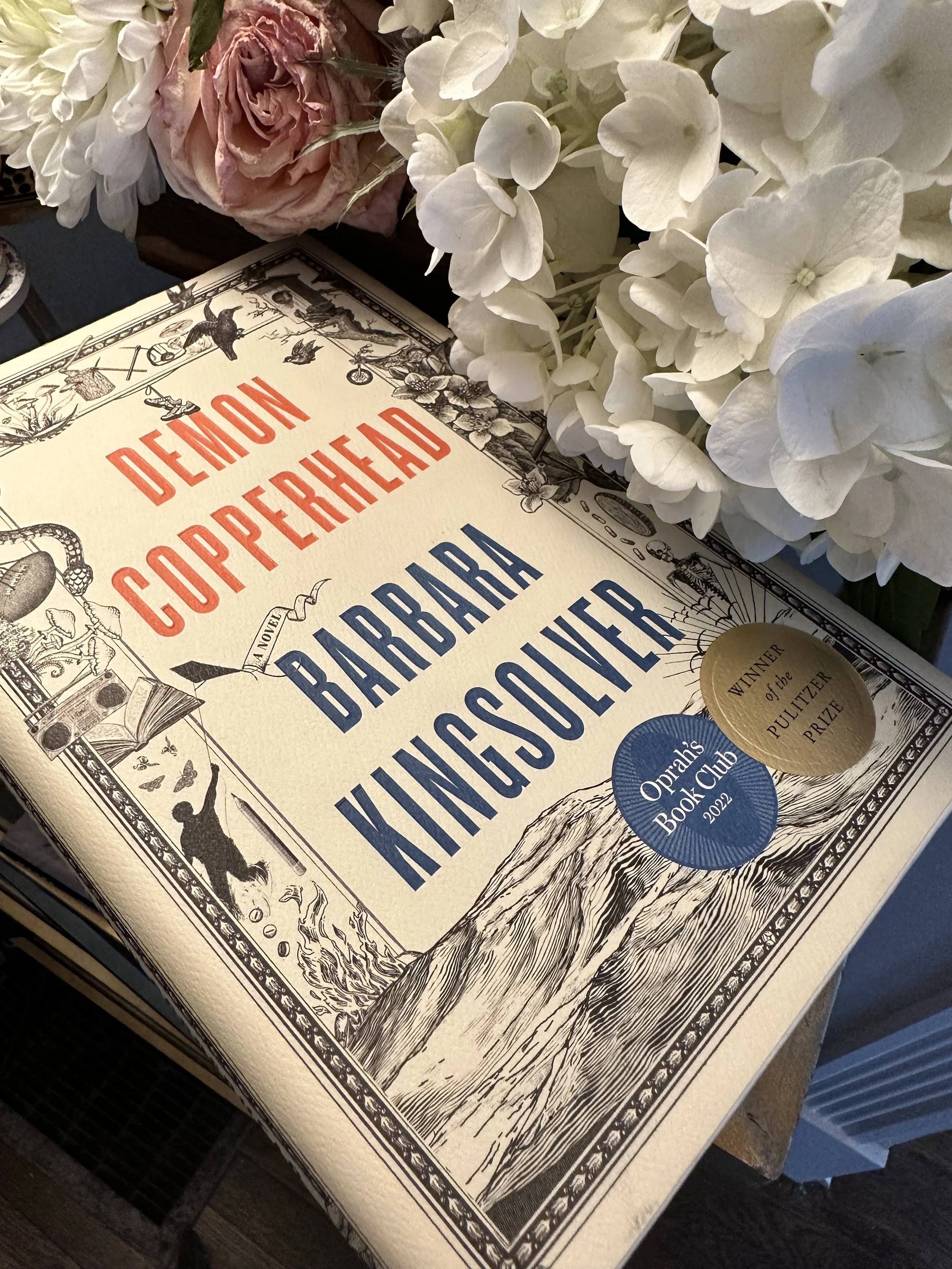
Due to the powerful critiques I heard when it came out, I could never bring myself to read Hillbilly Elegy but my interest in Appalachian history was piqued. As a reader with little background knowledge, it seemed as though Kingsolver took great care to show Appalachian life holistically while also acknowledging historical barriers and targeted exploitation the area has faced. I found the novel interesting, informative, and artful.
⭐⭐⭐⭐
March
Middlemarch by George Elliot
Another longtime to-be-read that I finally prioritized was Middlemarch by George Elliot. The story follows the young people of a fictional English town in the early 1800s as they court, marry, and discover the challenges of life. When I first started it, I was amazed I had not heard more of my fellow Jane Austen lovers recommend it; there were certainly similarities in both subject matter and tone. But as I read on, I felt I understood why. While I enjoyed it and am glad to have read it, to me it lacked heart. I consider it a good one-time-read.
⭐⭐⭐
April
The Adventures of Huckleberry Finn by Mark Twain
The Adventures of Huckleberry Finn by Mark Twain is the only reread on my list. Though I remembered liking it in high school, I did not remember much else about it. I knew I wanted to read James by Percival Everett this year, so I decided to start with this to help provide some context. As I reread, the entire second half was completely foreign to me and I honestly was a little shocked.
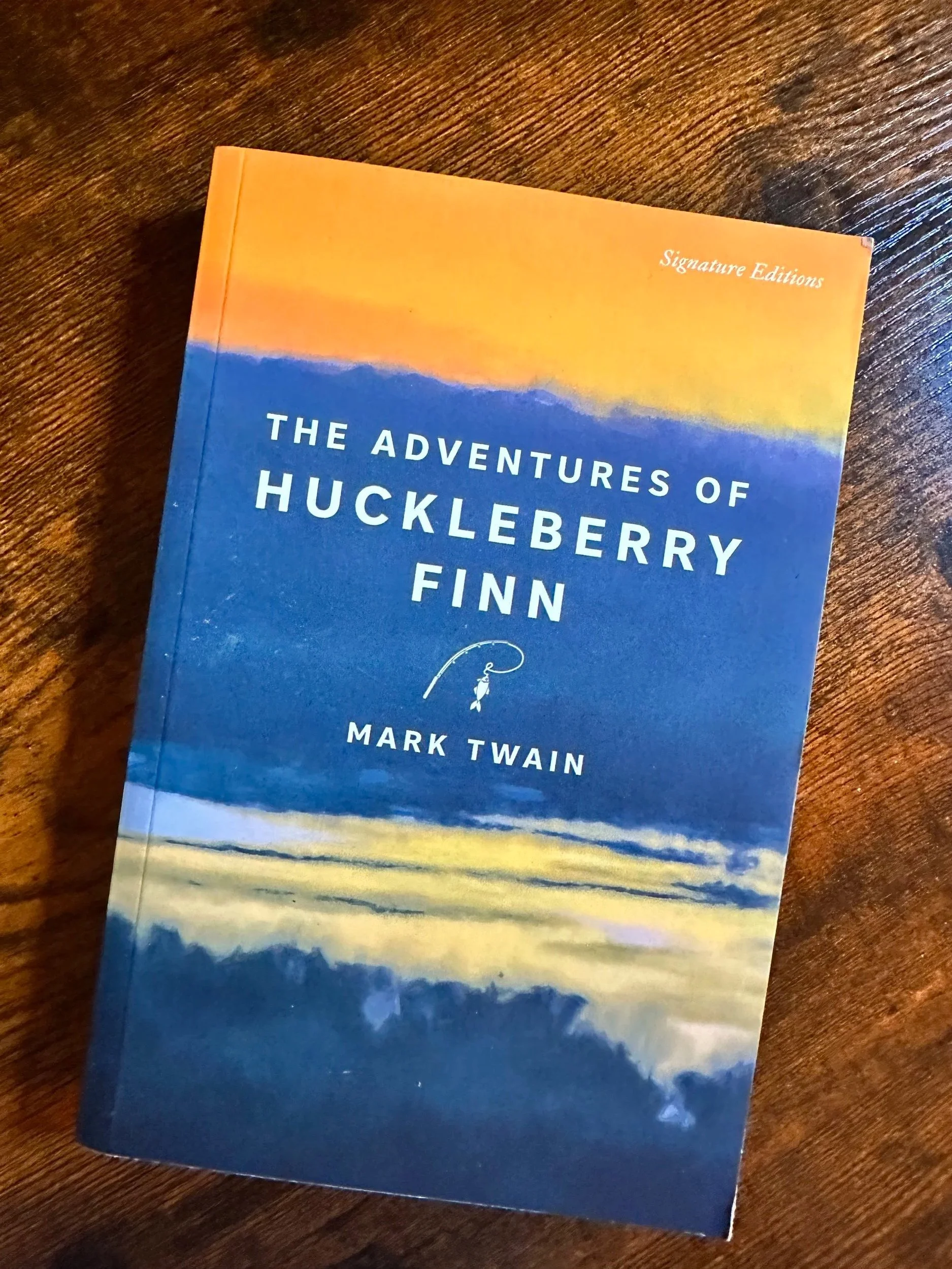
The Adventures of Huckleberry Finn was written in the late 1800s and is broadly considered a critique of slavery. I respect that Twain used his craft to bring attention to the inhumanity of slavery and at the same time, the derogatory language made it difficult to read. The story itself (of a boy and man who was enslaved running away together, northbound) interested me up to a point, mostly until Tom Sawyer enters the story. The last section of the story with Tom was infuriating to me and I could only imagine what was in store for me in James.
This book is considered by many as foundational to American Literature, so of course there’s that. But for me, this read was enough.
⭐⭐⭐
May
Year of Yes by Shonda Rhimes
I mixed it up a little in May. Starting with Year of Yes by Shonda Rhimes read by the author, this memoir kept me company on my many work drives this month. Rhimes is known for Grey’s Anatomy, Bridgerton, and many more shows that fill our lives. Though I knew of her, this book brought me into her story and her journey to a place of confidence and creativity. I loved the inserts of speeches she gave and her honesty about the ups and downs of public life. For anyone who is a fan of her work, looking for writing inspiration, or hoping to take a creative risk, this book is perfect for you.
⭐⭐⭐⭐
The Midnight Library by Matt Haig
The Midnight Library by Matt Haig has been featured on many lists as a modern must-read. The story confronts the question of regret and calls forth the reminder that living in a state of what-if only robs the present of fulfillment. I understand why people like this book; it felt cozy and was a quick read. For me, I thought the theme was piled on a little thick and at times felt too reductive. But I liked it enough to finish it and can speak about it warmly.
⭐⭐
June
Alice’s Adventures in Wonderland by Lewis Carroll
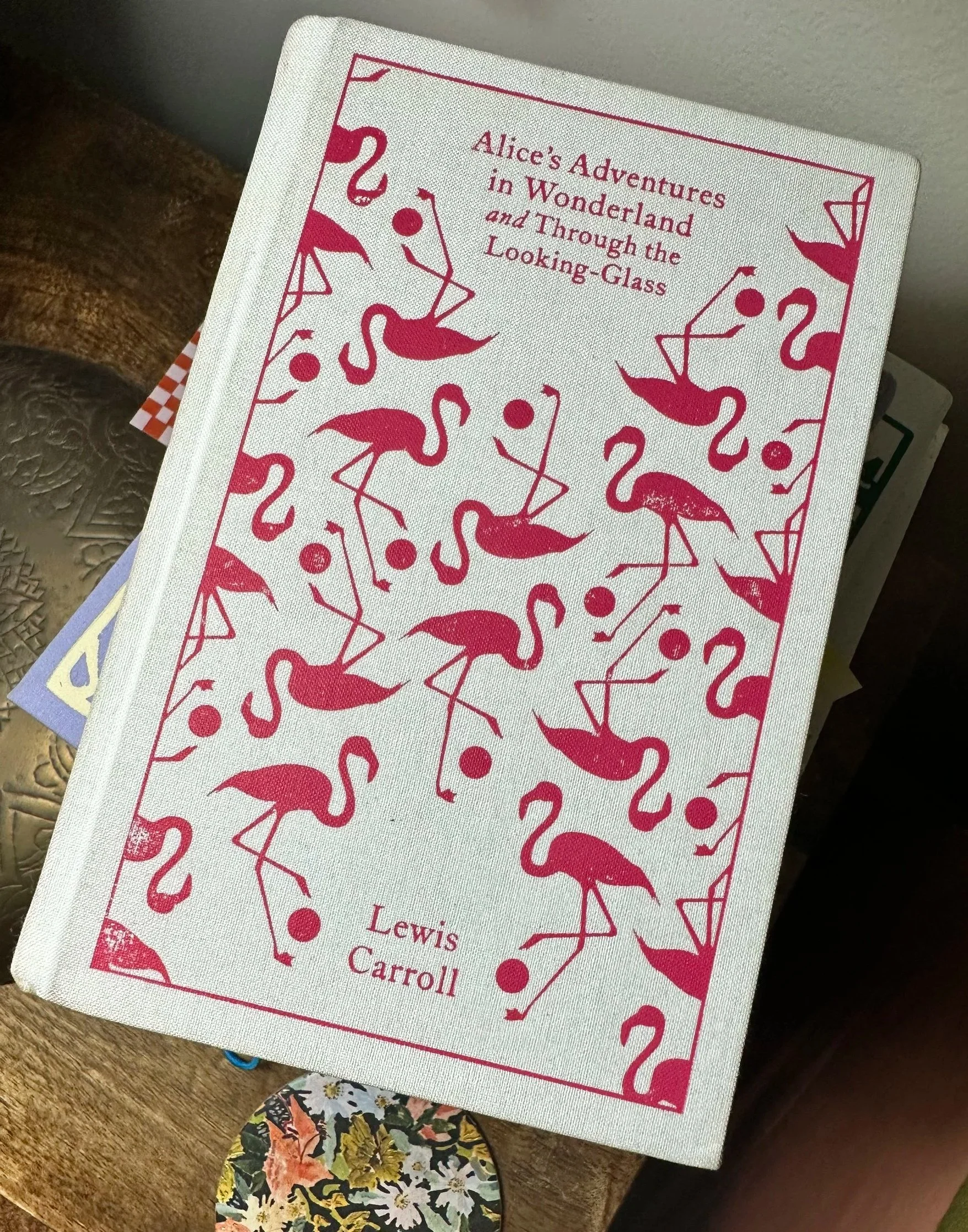
Not all classics are 500 pages of heavy moral conundrums. While I am familiar with Alice’s Adventures in Wonderland by Lewis Carroll, I had not actually read the book. So when my husband suggested a spontaneous beach trip, I knew exactly which book to bring with me for the day. The illustrations are delightful and the silliness brought such levity. Plus, I loved spotting the differences from the animated movie as I went along.
⭐⭐⭐⭐
White Noise by Don DeLillo
Recommended by a writer friend, White Noise by Don DeLillo is considered a modern classic and one I had not heard of before. It felt borderline sci-fi and reminded me of Kurt Vonnegut. The setting and time period felt very vague to me, which I realized as I read was intentional. And while I didn’t feel that some of the questions the story introduces had a satisfying payoff, I appreciated the unique world and writing style of DeLillo.
⭐⭐⭐⭐
July
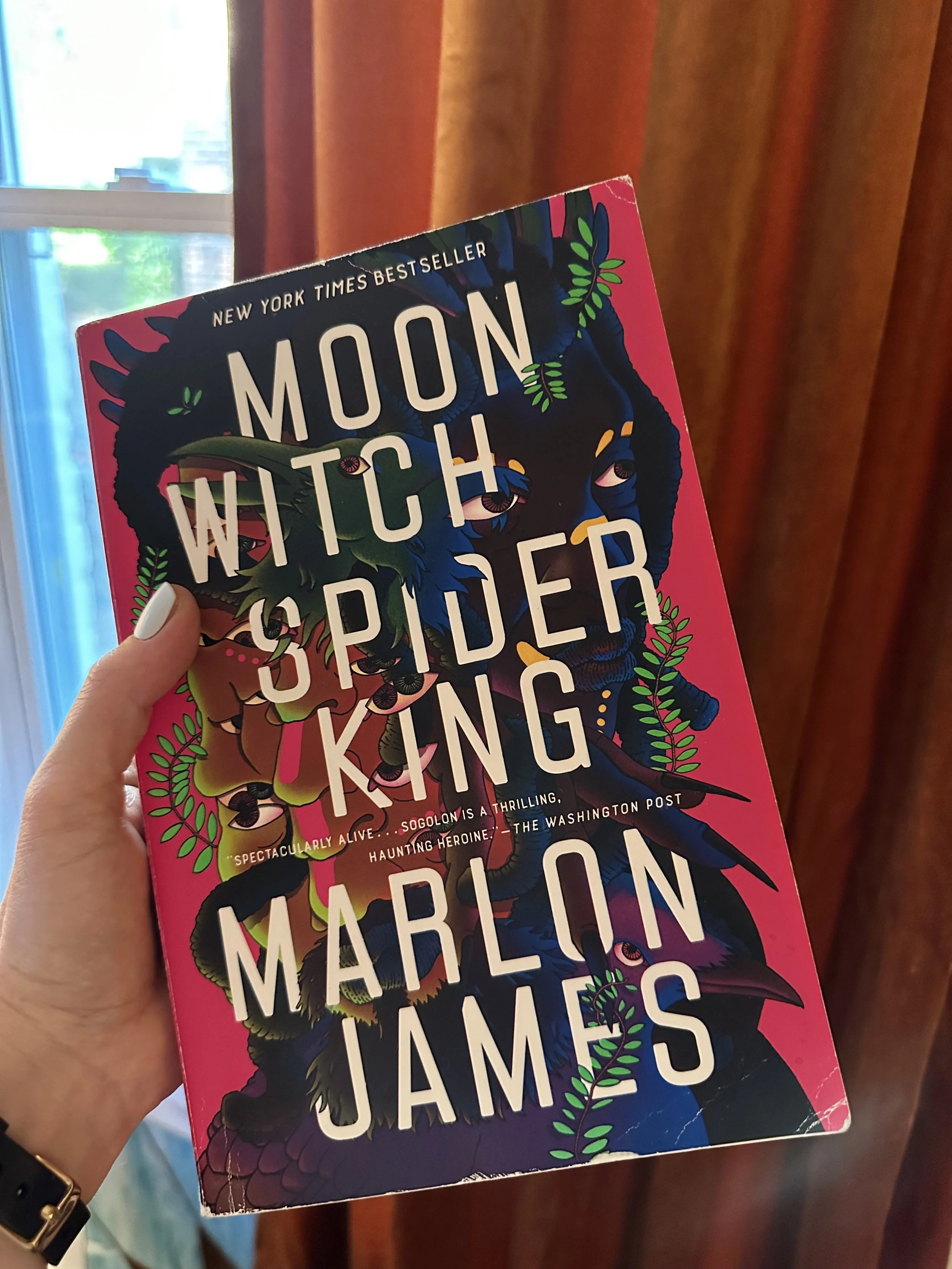
Moon Witch Spider King by Marlon James
I took our RV summer trip across Washington as my opportunity to dive into this second installment in the Dark Star Trilogy by Marlon James (easy to do when I’m not the one driving.) Moon Witch Spider King is a brilliant follow-up to Black Leopard Red Wolf, which I read at the end of 2023. My love for James’ writing is unparalleled by any modern writer. His mastery of language, world-building, and characterization blend together to make compelling, one-of-a-kind fantasy novels. To anyone who loves both fantasy and literature, this is the book series for you.
⭐⭐⭐⭐⭐
August
The Woman in Cabin 10 by Ruth Ware
This modern thriller was one I took up on audio to help me stay consistent with my running plan; I could only listen when I was on the track, so it needed to be compelling. The Woman in Cabin 10 by Ruth Ware was the perfect fit. This story of a murder on a yacht kept me intrigued and eager to lace up my running shoes throughout the week. Though by nature the story is plot driven, Ware brings strong and interesting characters into the mix, which is something I look for.
⭐⭐⭐
September
One Hundred Years of Solitude by Gabriel García Márquez
Known for its groundbreaking style – magical realism – One Hundred Years of Solitude by Gabriel García Márquez is another one I have been meaning to read for years. Set in Columbia and chronicling the development and collapse of the culture through the story of one family over one hundred years, this story is artful, informative, and compelling. Each page is packed to capacity, revealing much about human nature, society, and community. García Márquez does not spare the reader, he brings the vibrancy and the viciousness of humanity into focus. And he dares us to look away.
⭐⭐⭐⭐
October
Fahrenheit 451 by Ray Bradbury
A quick yet heavy read. Fahrenheit 451 by Ray Bradbury imagines a world where books are forbidden and explores the impact on society, interpersonal relationships, and individuals. Bradbury has one goal, which can feel stifling in a book (see my notes on Midnight Library), but he uses the quick pacing to his advantage. Each character represents a response and has a clear purpose. The story is tight and packs a punch. There are many classics I read in high school that went completely over my head, but I feel that this one is perfect for a teenage audience. It asks a clear question and allows the reader to ponder the answer.
⭐⭐⭐⭐
November
Imago by Octavia E. Butler
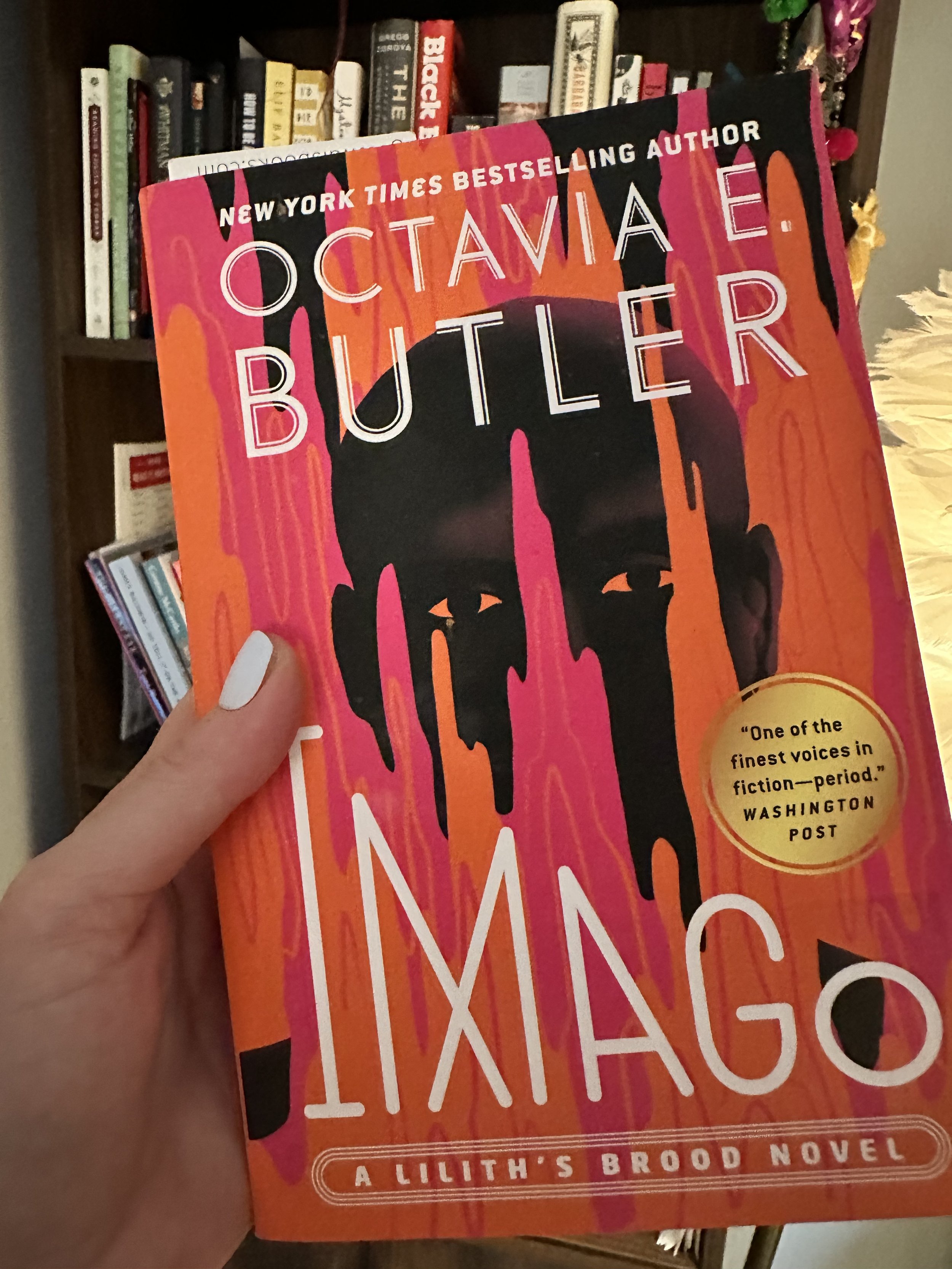
The third and final installment in the sci-fi series Lilith’s Brood, Imago by Octavia E. Butler rounds out this exploration of gender, family, and what it means to be human. I’ve read one each year for the past three years, and I love the way they stretch my imagination. Although this is through the eyes of a part-human, part-alien creature, Butler brings the flaws and beauty of humanity front and center. An intriguing series for anyone who is a fan of sci-fi.
⭐⭐⭐⭐
My Year of rest and relaxation
by Ottessa Moshfegh
I really didn’t know what to expect with this one. For the past few years, every time I’ve seen this book on the shelves, it has called to me. I finally broke down, took it home, and read it in one night. At first, I was confused as to what it was going for, but after a few chapters, got sucked in. Some of the themes, though odd in many ways, resonated with phases I have been through. In addition to the writing style, the content connected with me. It was strange; I liked it.
⭐⭐⭐⭐
December
Les Miserables by Victor Hugo
I was surprised by how quickly it sucked me in. Within pages, I was a woman obsessed. The 1862 epic is such a beautiful exploration of right and wrong, redemption, and justice. Obviously deeper and wider than a movie could convey, there were many surprises for me, despite growing up devoted to the 1998 film version. The many twists and turns, new characters, and ending were fresh and made the familiar story exciting. It took a few months to read, but is completely worth it.
⭐⭐⭐⭐⭐
Small Things like these by Claire Keegan
A sad but touching story, this short novel sheds light on a form of slavery in Ireland that I had no awareness of. Set at Christmas, it felt appropriate to read it this month. Keegan takes her time to familiarize the reader with her main character while also using each chapter to advance the story artfully. It is a masterclass in writing.
⭐⭐⭐⭐⭐
All in all, I am pleased with my selections this year. And while I always plan to incorporate classics into my annual reads, this year of focusing on them was a great recalibration. And I began using StoryGraph to track my progress, and cannot recommend it enough. It offers great insight into your reading metrics and crowd-sources reader response to help with recommendations. It is far superior to other virtual book shelves.
And for 2026, I am starting with James by Percival Everett and plan to continue leaning into my love of the classics. Quantity-wise, I am happy with 15, especially when they are so dense, and will likely maintain that goal. Quality over quantity remains fine with me.
related articles


